
Beyond Medication: Exploring Nonstimulant Treatment for ADHD
What You'll Learn: This article explains the full range of treatment options available for adult ADHD beyond stimulant medications, including nonstimulant medications, cognitive behavioural therapy, coaching, and brain-based approaches like PrTMS. You'll learn how different treatments work, what makes nonstimulant treatment for ADHD a viable alternative, and how lifestyle changes like exercise and nutrition support symptom management. If you're exploring ADHD treatment options or looking for alternatives to stimulants, this guide will help you understand what's available and how to build a personalized approach that works for your life.
Living with ADHD as an adult means navigating a landscape of treatment options that extends far beyond the stimulant medications most people associate with the condition, including nonstimulant treatment for ADHD.
If you've been prescribed medication but feel hesitant about starting, experience side effects, or simply want to explore what else is available, you have more choices than you might realize.
ADHD Medication Options
Most adults with ADHD receive stimulant medications as their first treatment option. These include methylphenidate (Ritalin, Concerta) and amphetamines (Adderall, Vyvanse). They work quickly, but they also carry potential for misuse and can cause side effects such as appetite suppression, sleep difficulties, and increased heart rate.
Nonstimulant Treatment for ADHD
Nonstimulant medications offer an alternative path. They work differently in the brain and typically take longer to become effective, often several weeks. Unlike stimulants, they do not carry the same abuse potential.
Atomoxetine is a selective norepinephrine reuptake inhibitor approved for adult ADHD. The brand name Strattera was discontinued in Canada by the end of 2023, but generic atomoxetine remains widely available and commonly prescribed. Once it builds up in the system, it works around the clock rather than wearing off during the day. It can be particularly helpful if you have both ADHD and anxiety, since stimulants sometimes worsen anxiety symptoms.
Guanfacine (Intuniv) and clonidine are alpha-2 agonists. Guanfacine extended-release is approved for children and teens in Canada and is also prescribed off-label for adults. While the extended-release clonidine formulation used for ADHD in the U.S. is not available in Canada, some physicians prescribe immediate-release clonidine off-label for similar purposes.
Bupropion (Wellbutrin) and venlafaxine (Effexor XR) are antidepressants that affect norepinephrine and may help reduce ADHD symptoms. Bupropion is often used when ADHD and depression occur together. These medications are generally considered third-line options in treatment guidelines.
Canadian guidelines recommend nonstimulant medications as second-line treatments when stimulants are contraindicated, not tolerated, or ineffective. In some cases, clinicians prescribe stimulants and nonstimulants together to improve overall symptom control.
ADHD treatment often involves combining approaches that target different aspects of how the condition affects the brain and daily functioning.
The overview below shows how common treatment options differ in focus and structure.
| Treatment approach | Primary focus | How it works | Time to notice change | Ongoing commitment |
|---|---|---|---|---|
| Stimulant medication | Neurochemical | Increases dopamine and norepinephrine activity | Rapid, often same day | Daily medication |
| Nonstimulant medication | Neurochemical | Modulates norepinephrine and related pathways | Gradual, weeks | Daily medication |
| Cognitive Behavioural Therapy (CBT) | Behavioral and cognitive | Builds skills for organization, planning, and emotional regulation | Gradual, over sessions | Time limited program with practice |
| ADHD coaching | Executive functioning support | Implements systems for daily life and accountability | Gradual, ongoing | Ongoing sessions |
| Lifestyle strategies | Foundational support | Supports brain health through sleep, movement, and nutrition | Variable | Daily habits |
| PrTMS | Neurological regulation | Targets brainwave patterns associated with ADHD | Gradual, often weeks | Time limited treatment course |
Therapy That Targets ADHD Directly
Medication addresses neurotransmitter imbalances, but it doesn't teach you how to organize your life or manage emotional responses. Cognitive behavioural therapy (CBT) fills this gap.
CBT for adult ADHD focuses on practical skills. You'll work on organizing tasks, managing time, planning effectively, and challenging unhelpful thought patterns. Research consistently shows CBT improves outcomes for adults with ADHD, particularly when combined with medication. A 2024 meta-analysis published in the Journal of Attention Disorders found that CBT combined with medication leads to better symptom control than medication alone.
CBT programs typically run 6-14 sessions and can be delivered individually or in groups. Many programs follow a modular structure with core skills shared across participants and optional modules tailored to individual challenges. You'll learn to break down overwhelming tasks, use planning systems that work for your brain, and recognize when you're falling into patterns like catastrophizing or all-or-nothing thinking.
The therapy also addresses the emotional side of ADHD. Many adults carry years of internalized criticism. They've been told they're lazy, unmotivated, or not trying hard enough. CBT helps reframe these experiences and develop more balanced, compassionate self-talk. You’ll learn to recognize when rejection sensitive dysphoria distorts how you interpret feedback. If your boss makes one critical comment, your ADHD brain might jump to "I'm totally getting fired." CBT teaches you to examine whether the evidence actually supports that conclusion and respond to criticism in ways that serve you better.
ADHD Coaching: Practical Support for Daily Life
ADHD coaching sits between therapy and practical life management. A coach helps you implement systems for the executive functions that ADHD disrupts: planning, time management, goal-setting, organization, and problem-solving.
Unlike therapists who may explore underlying emotional patterns, coaches focus on the here and now. They ask questions that help you discover your own solutions, such as what changes you want to make, what small steps you can take now, and how to motivate yourself when routine feels hard to sustain.
Coaches help you understand how your ADHD symptoms show up in daily life. They provide accountability through regular check-ins on whether you’ve implemented that filing system or started using that planner. Many coaches also help with finances, maintaining your home, nutrition, exercise, and sleep habits. You’ll work on concrete problems such as losing keys, chronic lateness despite effort, and remembering to pay bills on time.
The relationship itself provides structure. Regular coaching sessions become an anchor in your week. You commit to action steps between sessions, knowing someone will ask about them. This external accountability often works better than relying on internal motivation alone, particularly when ADHD makes follow-through difficult.
Coaching is based on wellness principles rather than treating a disorder. If you have co-occurring anxiety, depression, or substance use concerns, therapy is generally better suited to address those needs.
Movement Makes a Difference
Regular physical activity affects the same neurochemicals that ADHD medications target: dopamine, norepinephrine, and serotonin. These chemicals regulate attention, mood, and executive functioning.
Exercise improves focus, reduces impulsivity, and supports cognitive functioning in adults with ADHD. Aerobic activities like running or cycling, team sports that provide built-in accountability, and martial arts that combine physical movement with mental focus all show positive effects.
For many adults with ADHD, maintaining an exercise routine is the hardest part. Because ADHD brains crave novelty, repeating the same workout often becomes unsustainable.
Set a realistic minimum goal (15 minutes twice weekly) rather than an aspirational maximum you'll abandon
Build in variety by rotating between activities or changing your route
Find a workout partner or join a class for external accountability
Schedule multiple workout windows in a day so you have flexibility
Focus on activities you genuinely enjoy rather than what you "should" do
Even small amounts of movement make a difference. Ten minutes of walking, taking the stairs, or standing while you work all contribute to better ADHD symptom management.
Lifestyle Foundations That Support ADHD Treatment
Sleep, nutrition, and stress management are not separate from ADHD treatment. They're foundational to how well any other treatment works.
Sleep directly affects ADHD symptoms. Inadequate sleep worsens focus, attention, and impulse control. Many adults with ADHD also struggle with sleep disorders or view sleep as wasted time. Consistent sleep schedules, bedtime routines that signal your brain to wind down, and limiting screen time before bed all help.
Nutrition affects brain chemistry and cognitive function. Diets high in processed foods, saturated fats, and simple sugars may worsen ADHD symptoms, while balanced diets with adequate protein, omega-3 fatty acids, and complex carbohydrates support better brain function. Regular meal timing helps stabilize energy and attention throughout the day.
Adults with ADHD often struggle with irregular eating patterns. You might forget to eat until you're ravenous, then grab whatever is fastest, often not the healthiest option. Or you might eat impulsively when bored or procrastinating. Structured meal planning, keeping healthy snacks easily accessible, and mindful eating practices all help counteract these tendencies.
Stress management techniques such as mindfulness meditation, yoga, deep breathing, or tai chi help you pause and observe thoughts rather than being swept away by them. Mindfulness-based interventions can improve ADHD symptoms and executive functioning in adults.
PrTMS: Addressing ADHD Brainwave Patterns Directly
Personalized repetitive transcranial magnetic stimulation (PrTMS) takes a different approach by targeting brainwave imbalances associated with ADHD.
PrTMS uses gentle magnetic pulses to stimulate specific brain regions and support communication between neurons. The treatment begins with an EEG to map your unique brainwave patterns and identify irregularities. Software analyzes this data alongside your symptom assessment to create a personalized treatment protocol.
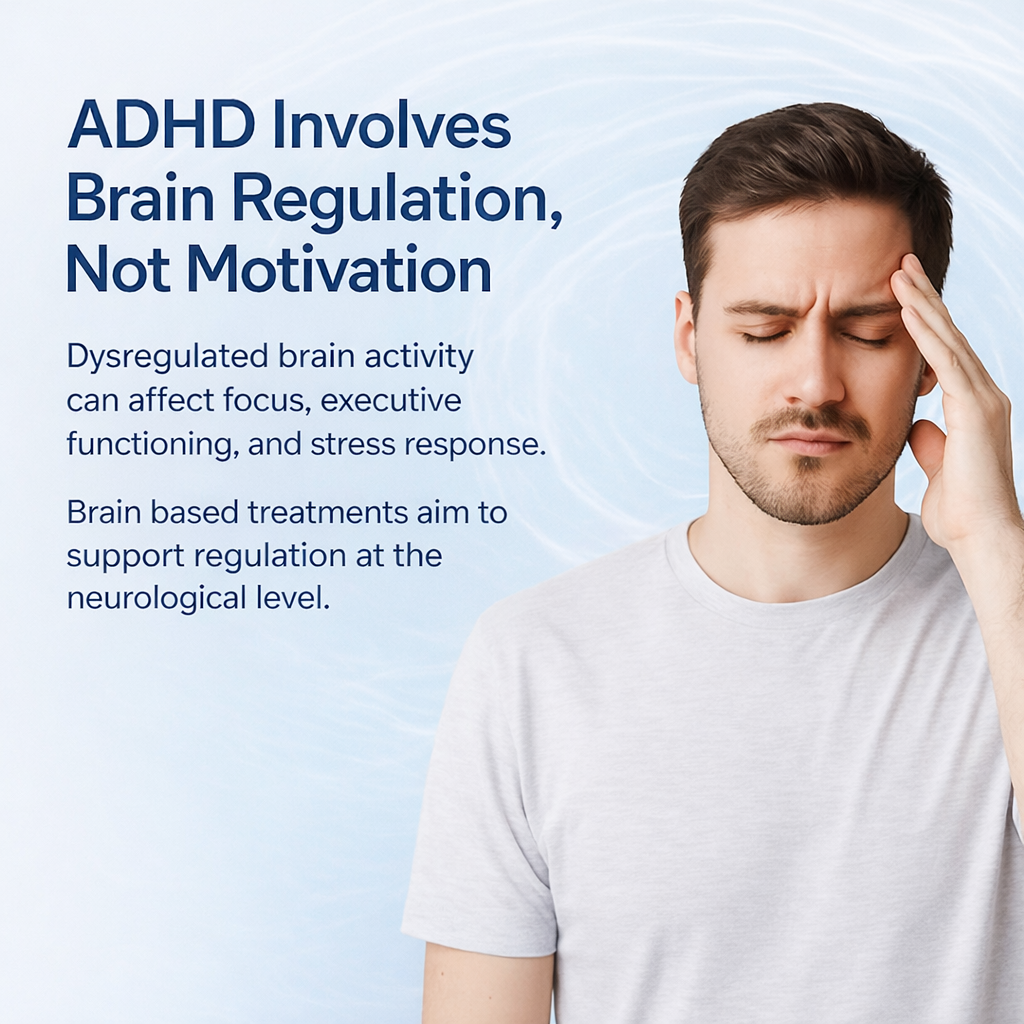
Treatment typically involves five 30-minute sessions per week for six to eight weeks. You can resume normal activities immediately after each session. Regular EEGs monitor progress and allow for protocol adjustments. Many people experience symptom improvement within a few weeks by addressing underlying neurological patterns rather than only managing symptoms.
Unlike medication, PrTMS does not require daily pills or raise concerns about substance misuse. It works by gradually reshaping problematic brainwave patterns, similar to how physical therapy retrains muscles after an injury. Learn more about PrTMS for ADHD.
Finding Your Combination
Most adults with ADHD find better outcomes by combining approaches rather than relying on a single treatment. You might use medication for core symptom control, CBT to build executive functioning skills, exercise for mood and focus support, and lifestyle adjustments to create a foundation for everything else.
Your combination will likely look different from someone else's. Some people need medication to function, while others manage well with therapy and lifestyle changes alone. Some thrive with stimulants, while others do better with nonstimulant options. Some benefit from intensive CBT, while others prefer the practical focus of coaching.
Canadian medical regulations prohibit any treatment from claiming to cure ADHD or guarantee specific outcomes. Treatment is about finding what reduces your symptoms enough that you can build the life you want.
Building Your Personal ADHD Treatment Plan
If you’re struggling with ADHD symptoms, whether or not you’re using medication, a comprehensive approach that addresses both neurological factors and practical life skills can support meaningful improvement.
Vancouver Brain Treatment Clinic offers complimentary consultations to discuss whether PrTMS might fit into your treatment plan.
If you’re considering additional treatment options, scheduling a consultation can help clarify which approaches may be appropriate for your symptoms, history, and goals. Options may include therapy, medication adjustments, or brain-based treatments such as PrTMS.