
Migraine Treatment in Vancouver: Medication-Free Relief with PrTMS
What You'll Learn: This article explains how PrTMS approaches chronic migraine differently than medication, targeting the neurological patterns driving your migraines rather than masking the pain. You'll learn what treatment involves at Vancouver Brain Treatment Clinic and whether this approach might be worth exploring if standard treatments haven't given you your life back.
You know what a bad migraine day costs you. Not just the pain. The cancelled plans, the lights you can't stand, the conversation you can't follow, and the guilt of letting people down again. You push through anyway because you don't have a choice. That's not managing migraines. That's surviving them.
If you’re looking for migraine treatment in Vancouver, chances are you’ve already tried a few avenues. Medications that helped briefly. Others that failed outright. Some that worked until the side effects created a new problem.
PrTMS takes a different approach to migraine treatment, one that focuses on the neurological patterns driving attacks rather than dampening pain after it begins.
What's Happening in the Migraine Brain

Chronic migraine is associated with altered cortical excitability. In practical terms, the brain reacts too easily and struggles to settle back down. Light, sound, and smell stop being background input and start acting like threats.
This heightened reactivity doesn’t appear randomly. It reflects a nervous system stuck in a state of over-response.
Preventive medications aim to lower this reactivity by changing neurotransmitter levels throughout the brain. For some patients, that helps. For others, the effect is partial, short-lived, or outweighed by fatigue, cognitive fog, or other systemic side effects.
How PrTMS Targets Migraines
PrTMS does not rely on whole-brain chemical changes. It uses targeted magnetic stimulation to influence the specific cortical regions involved in migraine regulation.
Treatment begins with assessment. At Vancouver Brain Treatment Clinic, we use Peak Logic technology to map your individual brainwave patterns. During EEG recording, we measure and analyze electrical activity across multiple brain regions. That data determines where stimulation is applied and how we deliver it.
The result is a treatment plan built around your neurological activity, not a standardized migraine protocol.
What the Research Tells Us
Single-pulse transcranial magnetic stimulation has demonstrated effectiveness for acute migraine with aura. Repetitive TMS (rTMS) has shown potential as a preventive approach by modifying cortical excitability and related neurotransmitter activity. Higher-frequency rTMS appears capable of normalizing abnormal excitability patterns observed in migraine patients, which supports its role in prevention, not only symptom interruption.
Research into PrTMS for migraines continues to evolve. Existing evidence supports the idea that addressing neurological dysregulation can produce meaningful improvement, particularly for patients who have not responded to conventional migraine treatment.
Who PrTMS Is Typically Considered For
PrTMS tends to make sense for people who've already tried the medications, adjusted the doses, tracked the triggers, and still cannot find the relief they need.
You've tried preventive medications without getting adequate control.
Topiramate, amitriptyline, propranolol, CGRP inhibitors. If one or more of these haven't brought your migraines to a manageable level, PrTMS approaches the problem from a different angle. Treatment can run alongside whatever you're currently taking.
The side effects have become their own problem.
Cognitive fog, weight gain, fatigue. For some people, the medication burden starts to rival the migraine burden. PrTMS targets specific brain regions and doesn't affect your body systemically, which is why side effects are minimal.
You want treatment that addresses the cause, not just the symptoms.
If you’re looking for migraine treatment in Vancouver that works on the underlying neurological drivers rather than adding another layer of symptom management, PrTMS is built around that goal.
What a PrTMS Session Looks Like
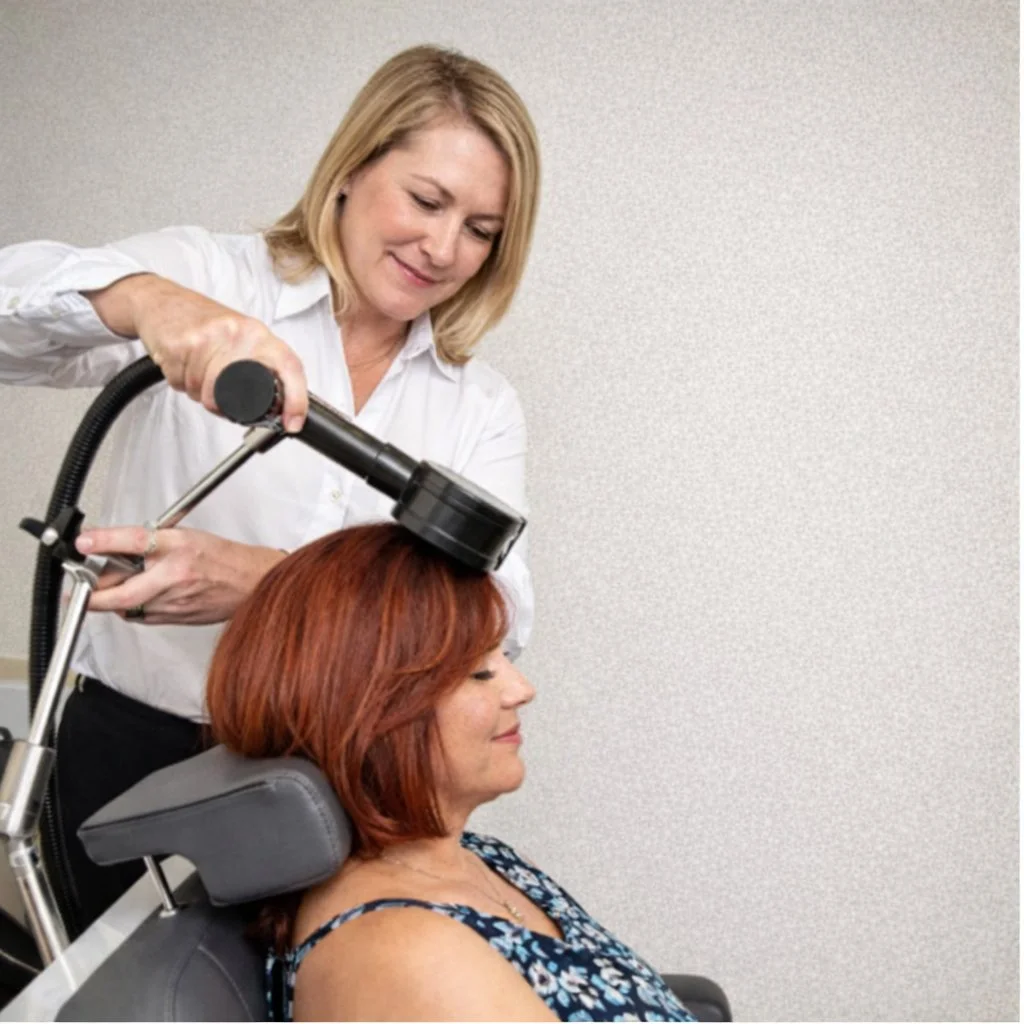
Sessions run 30 to 45 minutes. You sit in a chair, awake and alert, while a magnetic coil delivers precise pulses to the targeted area of your scalp based on your individualized treatment plan. You'll feel rhythmic tapping where the coil is placed. No sedation, no recovery time. Most patients drive themselves home after.
Treatment typically runs five days a week over several weeks. The total number of sessions depends on your individual plan.
The most commonly reported side effect is temporary scalp discomfort at the stimulation site. Because PrTMS doesn't involve medication, there are no drug-related systemic effects to manage.
Before Migraine Treatment Begins
Before sessions are scheduled, you'll complete an initial consultation and brain mapping assessment. We review your migraine history, prior treatments, and the neurological data gathered during EEG recording. That information determines whether PrTMS is appropriate for your situation and, if so, shapes your personalized treatment plan.
When Migraine Medication Hasn't Been Enough
If chronic migraines are still shaping your life despite multiple treatment attempts, a consultation at Vancouver Brain Treatment Clinic can help determine whether PrTMS is a reasonable next step.
Book your complimentary consultation to get started.