
PrTMS for Treatment Resistant Depression
What You'll Learn: This article explains what treatment resistant depression is, why standard antidepressants don't work for everyone, and how PrTMS targets depression at the neural level through a different mechanism than medication. You'll learn what the research shows on personalized TMS protocols, who tends to benefit from exploring this approach, and what treatment involves at Vancouver Brain Treatment Clinic.
You've tried multiple antidepressants. You've committed to therapy. You've adjusted dosages, switched medications, and given each approach adequate time. Yet depression persists, affecting your work, relationships, and quality of life.
This experience is more common than most people realize. Approximately 30% of individuals with major depression don't respond adequately to first-line treatments. When standard approaches haven't provided the relief you need, treatment resistant depression may be what you're facing.
PrTMS (Personalized repetitive Transcranial Magnetic Stimulation) offers a different approach. Rather than altering brain chemistry through medication, PrTMS targets the neural circuits involved in depression using precise magnetic stimulation.
What Qualifies as Treatment Resistant Depression?
Treatment resistant depression isn't simply depression that's difficult to manage. The clinical definition typically refers to major depression that hasn't responded adequately to at least two antidepressant trials, each at a therapeutic dose, lasting at least six to eight weeks.
This doesn't mean your depression is untreatable. It means the standard pharmaceutical approaches haven't been effective for your particular neurological makeup. Depression involves complex interactions between brain regions, neural circuits, and neurotransmitter systems. Genetic factors, individual brain structure, and the specific nature of your depression all influence how you respond to different treatments.
Research published in the Journal of Clinical Psychiatry indicates that with each failed antidepressant trial, the likelihood of responding to the next medication decreases. This isn't a reflection of personal failure. It reflects the complexity of matching treatment approaches to individual neurobiology.
How PrTMS Addresses Depression at the Neural Level
Standard antidepressants work by adjusting neurotransmitter levels throughout the brain (primarily serotonin, norepinephrine, or dopamine). PrTMS takes a different approach by directly stimulating specific brain regions that show reduced activity in depression.
|
The dorsolateral prefrontal cortex (DLPFC), located in the front part of your brain, plays a central role in mood regulation, decision-making, and emotional processing. Brain imaging studies consistently show reduced activity in this region among people with depression. Standard rTMS typically targets this single site. PrTMS goes further, stimulating three to five locations based on each patient's individual brain map, which allows treatment to address multiple underactive circuits rather than one. Medication adjusts the chemical messengers throughout your entire brain, hoping to achieve the right balance. PrTMS targets the specific circuits that aren't functioning optimally, working to normalize activity in those particular regions. The magnetic pulses create small electrical currents in targeted brain areas, encouraging neurons to fire more regularly and communicate more effectively. What makes PrTMS personalized is the brain mapping process. At Vancouver Brain Treatment Clinic, we use Peak Logic technology to assess your individual brain activity patterns before treatment begins. This assessment identifies which specific brain regions show reduced activity and determines the precise stimulation parameters your brain needs. Two people with treatment resistant depression may receive different protocols based on their unique neurological profiles. |
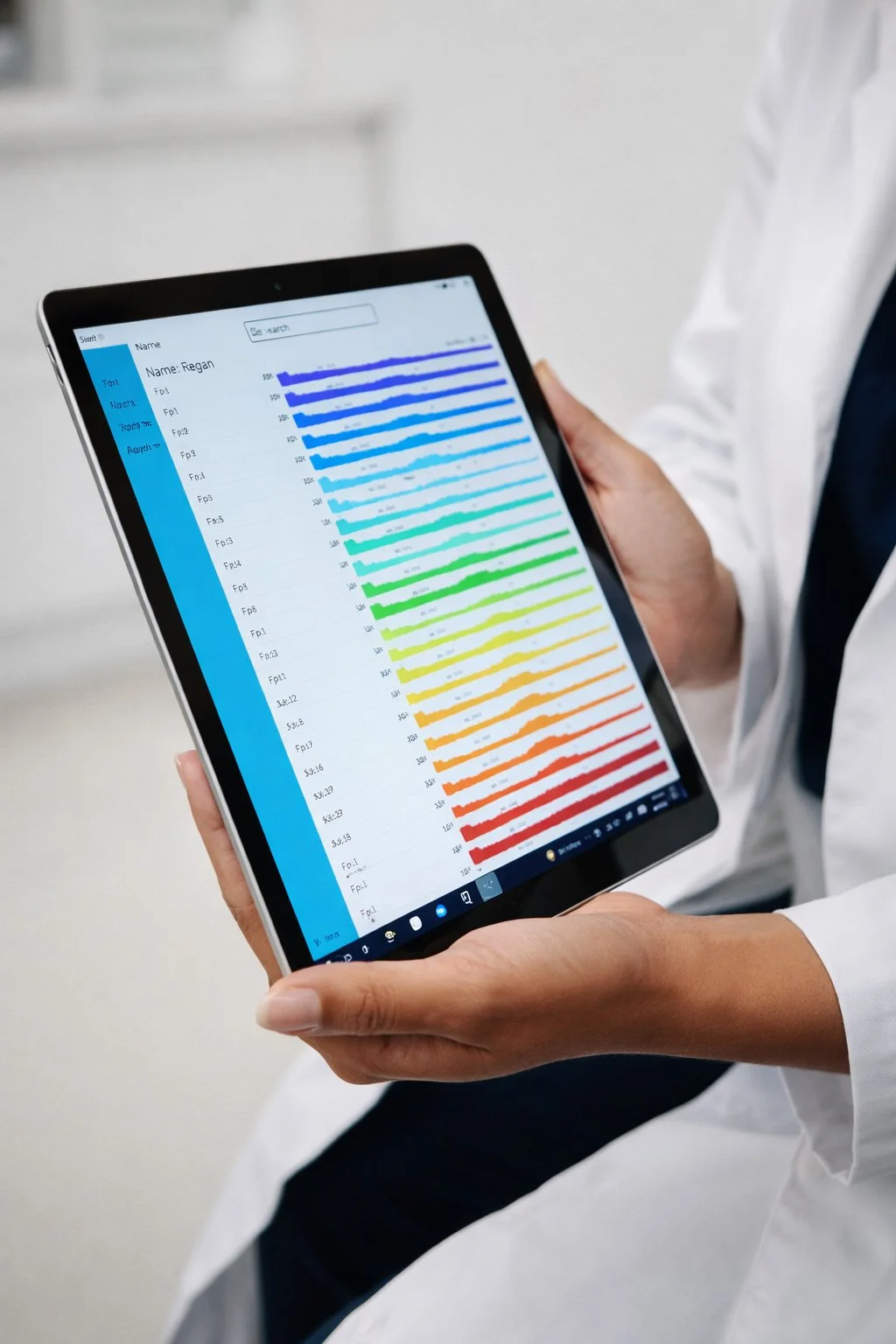 Peak Logic technology analyzes each patient's brainwave patterns to determine a personalized stimulation protocol.
|
TMS for Depression: What the Research Shows
Transcranial magnetic stimulation has been studied extensively for depression that hasn't responded to medication, and the clinical picture is consistent: TMS can produce meaningful improvement even when antidepressants haven't worked.
Personalized protocols show particularly strong results. Research examining PrTMS in 1,673 patients with major depressive disorder found substantial symptom reduction across all severity levels. Among patients with severe depression, 68% improved to moderately severe or better. Of those with moderately severe depression, 71% moved into the moderate range or better.
Mayo Clinic recognizes TMS as an established option when standard depression treatments aren't effective, reflecting how widely accepted this approach has become in mainstream medicine.
Follow-up research shows that people who respond well to an initial TMS course often hold onto those gains over time, especially when they continue with therapy or other ongoing support. Some people return for periodic maintenance sessions. Response varies from person to person, as it does with any depression treatment.
Who PrTMS May Be Right For
PrTMS isn't a single-profile solution. The people who tend to explore it have arrived at this point through different paths.
You've tried multiple medications without adequate response.
If you've given two or more antidepressants a fair trial without reaching remission, the issue likely isn't compliance or patience; it's mechanism. PrTMS works through an entirely different pathway than medication, targeting neural circuits directly rather than adjusting neurotransmitter levels systemically. You can continue your current medication while adding this neurological component.
Medication side effects have become a problem.
Some antidepressants cause sexual dysfunction, weight gain, or emotional blunting significant enough to affect daily life, sometimes to the point where staying on a medication that's partially working still feels unsustainable. PrTMS targets specific brain regions rather than affecting your entire body chemistry, which is why systemic side effects are minimal.
You've improved, but haven't reached remission.
Some people respond to medication or therapy but still carry significant symptoms. You're better than you were, but not where you need to be. For this group, PrTMS can potentially address what remains by stimulating circuits that medication hasn't fully reached, without requiring you to abandon what's already helping.
You prefer treatment that doesn't involve pharmaceuticals.
Whether because of other health conditions, medication interactions, or personal preference, some people want a neurological intervention that doesn't involve introducing substances into their system. PrTMS fits that profile. It works alongside existing therapy and care rather than replacing it, and an initial consultation determines whether it fits your specific situation.
What Treatment Involves at Vancouver Brain Treatment Clinic
|
We begin with an assessment that includes brain mapping using Peak Logic technology. EEG data is collected to evaluate brainwave patterns and guide development of your personalized stimulation protocol. During this process, you wear a cap with sensors that record electrical activity across different brain regions. Treatment sessions take place while you’re awake and seated. A magnetic coil is positioned at targeted areas of the scalp according to your individualized plan. Magnetic pulses are delivered in specific patterns, producing a tapping sensation and audible clicking sounds. Sessions typically last 30 to 45 minutes, and patients are able to return to normal activities afterward. For treatment resistant depression, protocols often involve sessions five days per week over several weeks. The total number of sessions depends on the treatment plan and clinical response. Because PrTMS does not involve medication or anesthesia, it does not produce medication-related systemic effects and does not require sedation. |
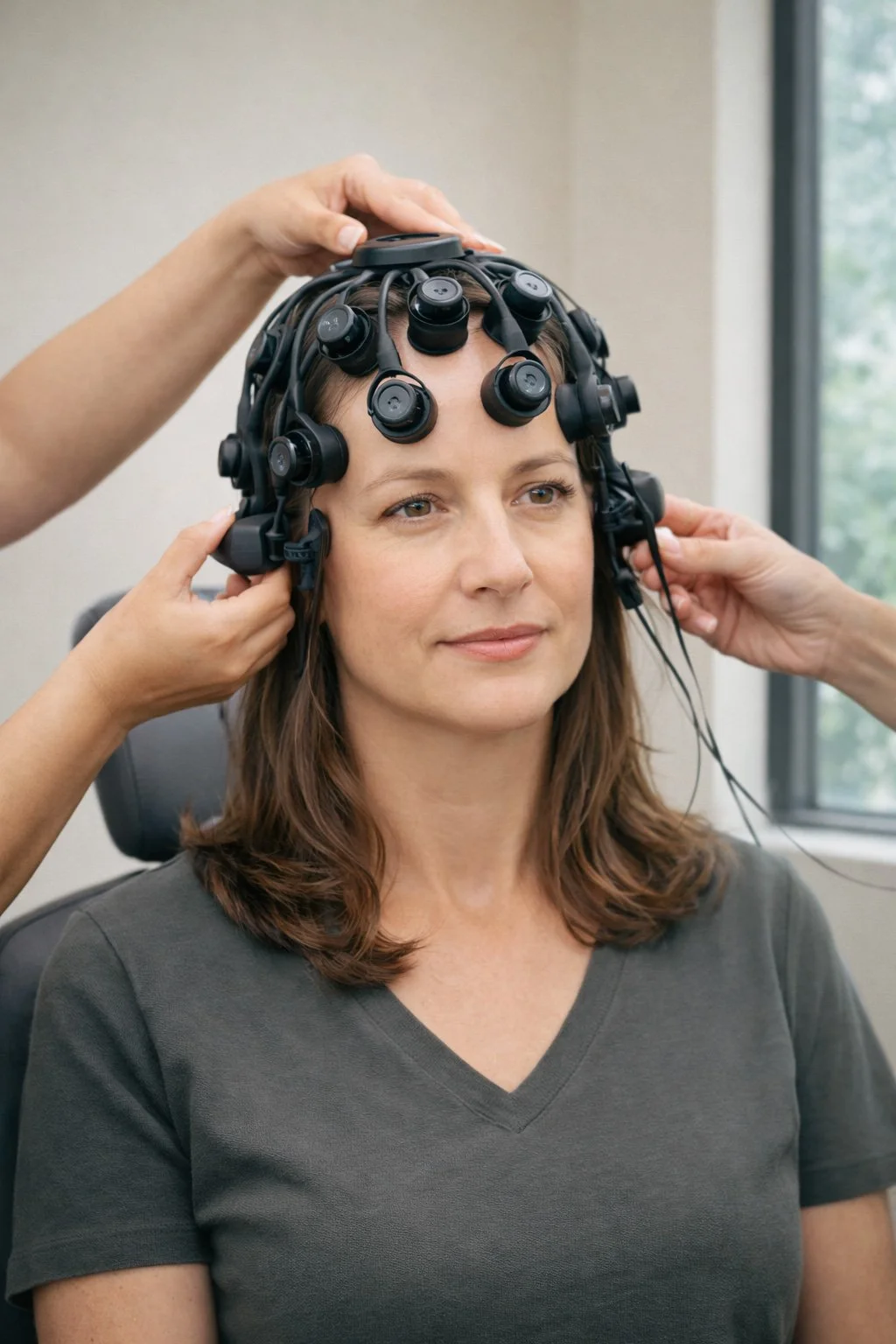 Brain mapping begins with an EEG cap that measures electrical activity across different regions of the brain.
|
Beyond What You’ve Already Tried
If you've been managing treatment resistant depression, you've likely invested considerable time and effort into finding something that works. An initial consultation at Vancouver Brain Treatment Clinic can clarify whether PrTMS belongs in that picture.
Contact Vancouver Brain Treatment Clinic to schedule a consultation. We'll review your neurological patterns and discuss whether this approach makes sense for your particular situation.